
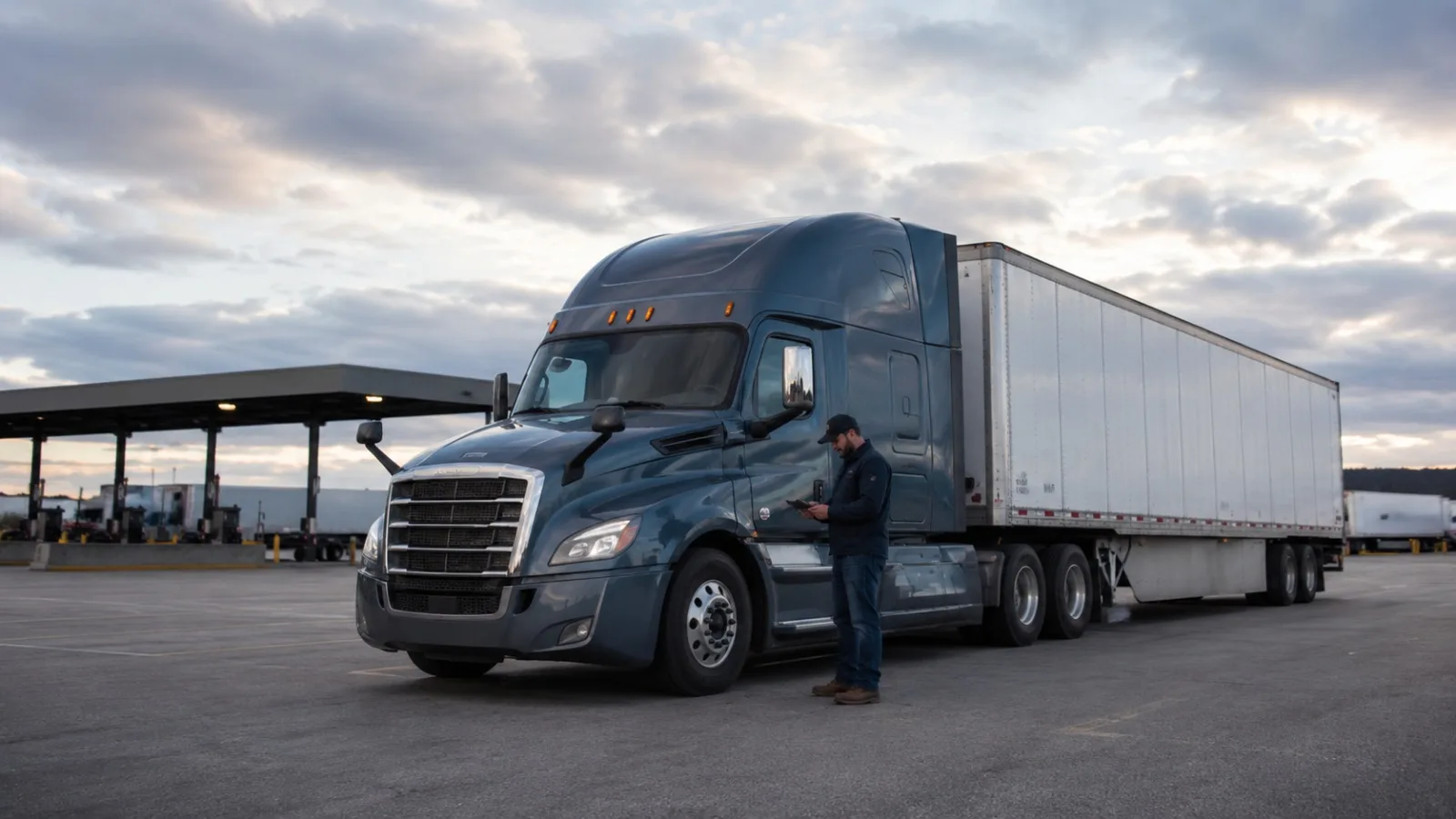
A new trucking authority can be operated by a driver with ten or twenty years of commercial experience and still be treated as a new insurance risk.
The reason is that the insurer evaluates two separate records:
- the history of the individual driver;
- the history of the motor-carrier business.
An experienced driver may have:
- a long CDL history;
- no preventable accidents;
- no serious violations;
- extensive tractor-trailer experience;
- knowledge of the intended lanes and equipment.
The newly authorized company can still have:
- no carrier-level loss runs;
- no roadside inspection history;
- no insurance continuity;
- no premium-payment history;
- no established driver-management process;
- no evidence that its safety procedures work in practice.
The insurer must price both the person and the business.
Why insurers treat a new authority differently
Insurance pricing is based partly on expected future losses.
An established carrier can give the underwriter evidence showing how it has operated over time. A new authority cannot yet provide most of that evidence.
The insurer therefore has more uncertainty about:
- accident frequency;
- claim severity;
- vehicle maintenance;
- driver selection;
- hours-of-service compliance;
- cargo;
- routes;
- annual mileage;
- business stability;
- insurance payment behavior;
- response to safety problems.
Greater uncertainty does not mean the carrier will operate unsafely. It means the insurer has less carrier-specific evidence for reaching that conclusion.
An established carrier can show actual results
An established carrier may provide:
- three to five years of loss runs;
- roadside inspection history;
- claims documentation;
- stable driver roster;
- equipment schedules;
- maintenance procedures;
- continuous policy history;
- premium-payment history;
- consistent commodities and lanes;
- safety-management records.
A new venture mostly provides projections.
It tells the insurer what it plans to do rather than showing what it has already done successfully.
| Underwriting evidence | Established carrier | New authority |
|---|---|---|
| Carrier loss history | Several completed policy years may be available | Usually none under the new entity |
| Roadside inspections | Actual inspection record can be reviewed | Little or no carrier-level history |
| Insurance continuity | Prior policies and renewals can be verified | No operating-policy history under the authority |
| Driver stability | Turnover and hiring performance may be measurable | Proposed drivers and hiring plans |
| Cargo and routes | Actual freight mix and mileage can be measured | Business-plan estimates |
| Safety controls | Procedures can be compared with results | Procedures have not yet been tested operationally |
The FMCSA New Entrant period
FMCSA considers a new interstate motor carrier a New Entrant for 18 months after it registers and receives a USDOT number.
During this period, the carrier’s safety performance is monitored.
FMCSA generally conducts a safety audit within 12 months after the carrier begins operations.
The audit examines whether the carrier has basic safety-management controls covering areas such as:
- driver qualifications;
- hours of service;
- vehicle maintenance;
- controlled substances and alcohol testing;
- accident records;
- insurance;
- operating requirements.
The New Entrant designation is a regulatory program. It does not set the insurance premium.
However, the same absence of carrier history that makes regulatory monitoring necessary also affects the amount of evidence available to an insurer.
Regulatory status and underwriting status are different
A carrier can:
- leave the formal New Entrant period;
- pass the safety audit;
- and still receive an expensive renewal.
Conversely, a carrier can remain within its first 18 months and obtain a competitive quotation when its overall profile is favorable.
Insurance companies can define a “new venture” using different periods, such as:
- no prior authority history;
- fewer than one year in business;
- fewer than two years;
- fewer than three years;
- insufficient continuous loss information.
The insurer’s definition does not have to match FMCSA’s 18-month designation.
Fewer insurers may be willing to quote
Price depends partly on competition.
An established clean carrier may qualify for quotations from several insurers. A new authority may qualify for fewer markets because some underwriting programs require:
- minimum authority age;
- several years of loss runs;
- minimum driver experience;
- defined cargo;
- acceptable radius;
- clean motor vehicle records;
- continuous prior insurance.
When fewer insurers compete for the account, the carrier has less ability to choose among:
- premiums;
- payment plans;
- deductibles;
- exclusions;
- cargo forms;
- physical-damage terms;
- policy services.
A declined quote does not always mean the carrier is unsafe
An insurer can decline a new authority because the operation falls outside its current business strategy.
Possible reasons include:
- the insurer does not write new ventures;
- the state is restricted;
- radius exceeds the program;
- cargo is excluded;
- the driver lacks qualifying experience;
- vehicle type is outside the program;
- the insurer has reached capacity in that segment.
Another insurer may evaluate the same operation differently.
The carrier should distinguish between:
- an underwriting decline;
- an unaffordable quote;
- an incomplete submission;
- and a genuine compliance problem.
The driver still has a major effect
Authority age is only one factor.
Progressive identifies factors including:
- inspection history;
- coverage requirements;
- vehicle type;
- cargo;
- operating radius;
- driving history.
The driver’s record can materially improve or worsen the new authority’s price.
Commercial driving experience
Underwriters can examine:
- total CDL experience;
- recent tractor-trailer experience;
- experience with the intended equipment;
- experience with the intended cargo;
- employment verification;
- periods without commercial driving;
- state licensing history.
A driver with ten years of local box-truck experience is not automatically treated the same as a driver with ten years of interstate tractor-trailer experience.
The relevance of experience matters.
Motor vehicle record
The insurer can review:
- speeding violations;
- reckless driving;
- improper lane change;
- following too closely;
- license suspension;
- preventable accidents;
- DUI history;
- out-of-service events;
- other serious violations.
Progressive states that accidents and violations can have a substantial effect on commercial truck pricing because heavy vehicles can cause severe losses.
Multiple drivers
Adding drivers increases the number of people who can create a claim.
The insurer may evaluate each driver separately.
One unfavorable driver can:
- increase premium;
- create a driver exclusion;
- reduce available markets;
- prevent the account from being quoted.
| Driver factor | Why it matters | Evidence commonly requested |
|---|---|---|
| CDL experience | Helps assess familiarity with heavy commercial vehicles | License, application and employment history |
| Recent commercial experience | Long gaps may reduce the relevance of older experience | Prior employers and driving dates |
| Motor vehicle record | Shows violations, suspensions and reported driving events | State MVR |
| Accident history | Helps evaluate frequency and severity | Loss reports and driver explanation |
| Equipment experience | Specialized trucks can require specialized knowledge | Employment and equipment records |
| Cargo experience | Hazmat, auto hauling and reefer operations add distinct risks | Prior work and endorsements |
Operating under your own authority changes the insurance structure
A leased owner-operator and an owner-operator with authority can own similar tractors but have different personal insurance costs.
When leased onto another authorized carrier, the carrier generally provides primary public-liability insurance for operations under its authority.
The leased owner-operator may separately purchase protection such as:
- physical damage;
- bobtail or unladen liability;
- non-trucking liability;
- occupational accident;
- passenger accident;
- personal property.
An owner-operator using their own authority must arrange the carrier’s primary insurance program and federal filing.
That program can include:
- primary auto liability;
- MCS-90 endorsement;
- BMC filing;
- motor truck cargo;
- physical damage;
- general liability;
- trailer protection;
- uninsured or underinsured motorist coverage;
- state-required coverage.
A higher total cost under own authority does not necessarily mean the same coverage became more expensive. The operator may now be buying additional and broader protection.
| Insurance responsibility | Leased onto carrier | Operating under own authority |
|---|---|---|
| Primary public liability | Generally maintained by authorized carrier for covered operations | Maintained by owner-operator’s carrier business |
| FMCSA liability filing | Filed under lessee carrier’s authority | Filed under owner-operator’s authority |
| Motor truck cargo | Depends on carrier policy and lease | Carrier selects and purchases required coverage |
| Physical damage | Frequently owner-operator responsibility | Owner-operator responsibility |
| Personal or non-business use | May require non-trucking liability | Must be addressed by the carrier’s own policy structure |
Cargo can make a new authority harder to insure
The phrase “general freight” can cover very different exposures.
The insurer needs to know what the carrier will actually haul.
Potentially more difficult categories can include:
- automobiles;
- electronics;
- pharmaceuticals;
- alcohol;
- tobacco;
- refrigerated food;
- household goods;
- hazardous materials;
- oversized equipment;
- mobile homes;
- logging;
- waste;
- livestock;
- high-value machinery.
Cargo affects both:
- potential liability severity;
- potential cargo-loss severity.
A carrier that initially describes its operation narrowly and later accepts excluded freight can create a serious claim and cancellation problem.
Occasional loads still matter
A carrier cannot necessarily omit a commodity because it represents only a small percentage of expected revenue.
The insurer can ask about:
- regular cargo;
- occasional cargo;
- seasonal cargo;
- maximum-value cargo;
- prohibited cargo.
A rare high-value shipment can create the largest loss of the year.
Operating radius changes the exposure
A local carrier and a nationwide carrier do not present identical risks.
A larger radius can involve:
- more annual miles;
- more states;
- unfamiliar roads;
- longer duty periods;
- weather changes;
- dense metropolitan areas;
- greater claim opportunity;
- more complex regulatory exposure.
Progressive lists operating radius among the factors affecting truck insurance pricing.
Report the maximum realistic radius
The carrier should not select a lower radius merely because most loads are local.
The application should account for the farthest operation the business reasonably expects to perform.
A policy written for a local radius can become problematic when the carrier routinely accepts long-haul freight.
Location and garaging affect the quote
Insurance pricing can differ by:
- state;
- ZIP code;
- principal garaging location;
- operating territory;
- claim environment;
- traffic density;
- repair costs;
- theft exposure;
- litigation environment.
The carrier must provide the true location where the truck is principally based and garaged.
Using:
- a relative’s address;
- virtual office;
- registered-agent address;
- mail-forwarding service;
- address in a cheaper state
does not make that location the legitimate garaging address.
Business registration and garaging are different facts
The LLC may be registered in one state while the truck is physically based in another.
The insurer needs both facts.
An inaccurate address can lead to:
- premium correction;
- policy cancellation;
- nonrenewal;
- claim dispute;
- allegation of material misrepresentation.
Vehicle type and value affect both liability and physical damage
A heavy tractor-trailer can create more severe third-party damage than a light commercial vehicle.
The insurer can consider:
- GVWR;
- tractor type;
- trailer type;
- equipment age;
- replacement cost;
- repair expense;
- safety technology;
- theft exposure;
- annual mileage.
Physical-damage premium also depends heavily on the insured value of the tractor and trailer.
Newer does not always mean cheaper
A newer truck can include:
- automatic emergency braking;
- lane-departure warning;
- collision mitigation;
- cameras;
- telematics.
Those systems can reduce some risks.
The same truck can also have:
- higher replacement value;
- expensive sensors;
- longer repair times;
- costly electronic components.
The net insurance effect depends on the insurer and vehicle.
Commercial auto loss costs affect new and established carriers
Authority age is not the only reason truck insurance can be expensive.
Travelers identifies broader pressures in commercial auto insurance, including:
- bodily-injury loss costs;
- litigation costs;
- distracted and impaired driving;
- inexperienced drivers;
- vehicle repair and replacement costs;
- severe accidents.
These market conditions can raise the starting point for all carriers.
A new authority can therefore face two overlapping pressures:
- a difficult commercial-auto market;
- limited carrier-specific history.
Coverage choices can make quotes appear further apart
Two quotations are not comparable merely because both say “truck insurance.”
One quote may include:
- $1 million liability;
- $100,000 cargo;
- physical damage;
- general liability;
- trailer interchange;
- low deductibles.
Another may include:
- liability only;
- no physical damage;
- restrictive cargo;
- larger deductibles;
- narrower radius;
- fewer listed drivers.
The lower premium may simply buy less insurance.
| Quote item | Lower-cost version | Higher-cost version |
|---|---|---|
| Liability limit | $750,000 | $1,000,000 |
| Cargo limit | No cargo or restricted cargo | $100,000 or higher usable cargo coverage |
| Physical damage | Not included | Tractor and trailer included |
| Deductible | Higher retained loss | Lower retained loss |
| Operating radius | Local or regional | Long-haul or nationwide |
| Commodities | Narrow general freight | Broader or higher-risk freight |
Why the down payment can be difficult
The annual premium is only one part of startup affordability.
A new carrier can also face:
- substantial initial deposit;
- premium-finance charges;
- installment fees;
- fewer payment options;
- minimum-earned premium;
- separate deposits for different policies.
A $20,000 annual program does not necessarily mean twelve equal payments of approximately $1,667.
The policy might require:
- 20 percent down;
- nine or ten later installments;
- interest;
- fees;
- accelerated cancellation after missed payment.
Startup cash should extend beyond the deposit
OOIDA recommends that a carrier entering authority have startup money for insurance, permits, equipment and other obligations and advises maintaining substantial operating capital before the first load.
The carrier should retain enough cash after binding insurance for:
- fuel;
- maintenance;
- deductibles;
- truck payment;
- trailer expense;
- permits;
- delayed broker payment;
- unexpected premium endorsements.
How a carrier can improve its future insurance profile
The first year should be treated as evidence-building.
The carrier cannot change its age, but it can control many of the records created during that year.
First-year insurance improvement plan
- 01 Keep insurance continuously active
Protect every payment date and avoid cancellations, late reinstatements or gaps in FMCSA filings.
- 02 Control driver quality
Use qualified drivers with relevant experience and review motor vehicle records before granting access to equipment.
- 03 Maintain the vehicles
Document inspections, preventive maintenance, repairs and annual inspections in an organized system.
- 04 Build clean roadside history
Prepare drivers and vehicles for inspections and correct violations rather than treating them as isolated events.
- 05 Stabilize cargo and radius
Avoid expanding into unfamiliar freight or territories before insurance and safety systems are ready.
- 06 Report changes before they occur
Notify the insurer about vehicles, drivers, cargo, radius, garaging and business changes.
- 07 Document safety management
Keep written procedures, training, driver files, maintenance records and corrective actions.
- 08 Begin renewal early
Give the agent enough time to obtain loss runs, prepare submissions and approach several insurers.
Maintain continuous coverage
Progressive lists continuous commercial auto coverage among the circumstances that can qualify some customers for savings.
Beyond any specific discount, continuity can demonstrate:
- stable operations;
- timely payment;
- no intentional coverage gaps;
- organized renewal management.
A lapse can create:
- FMCSA filing cancellation;
- authority revocation risk;
- replacement deposit;
- fewer markets;
- higher pricing;
- inability to operate.
Build clean inspection history
Progressive identifies inspection history as a truck-insurance pricing factor.
The carrier should focus on:
- vehicle condition;
- hours-of-service compliance;
- driver credentials;
- medical certification;
- load securement;
- required documents;
- corrective action.
A clean inspection does not guarantee a discount, but it creates favorable carrier-specific evidence that did not exist at startup.
Keep complete loss records
Even when no claim is paid, document reported incidents accurately.
Maintain:
- insurer loss runs;
- accident register;
- police reports;
- photographs;
- claim correspondence;
- corrective actions;
- driver training;
- repair records.
An underwriter can evaluate a documented event more effectively than an unexplained incident.
What may not reduce the premium
Certain actions are commonly presented as guaranteed savings even though their effect varies by insurer.
Passing the New Entrant audit
Passing is essential for compliance, but it does not create a mandatory insurance discount.
Reaching one year of authority
A birthday alone does not erase:
- violations;
- claims;
- unstable drivers;
- high-risk cargo;
- difficult routes;
- policy lapses.
Raising the deductible
A higher deductible can reduce premium, but it transfers more claim cost to the carrier.
It is not a true saving when the business cannot fund the retained loss.
Reducing the reported radius
This only works when the operation genuinely remains within that radius.
Providing inaccurate information is not a pricing strategy.
Removing necessary cargo coverage
A cheaper policy can prevent the carrier from accepting planned loads or leave the business exposed to a cargo loss.
How to prepare a stronger renewal submission
A strong renewal should explain the carrier’s completed first year rather than merely requesting a lower price.
New-authority renewal submission checklist
- Current FMCSA carrier profile
- Current authority status
- Updated vehicle schedule
- Updated driver schedule
- Motor vehicle records
- Driver commercial-experience history
- Current loss runs
- Accident register
- Roadside inspection history
- Corrective-action records
- Preventive-maintenance program
- Annual inspection records
- Driver qualification process
- Drug and alcohol testing documentation
- Hours-of-service procedures
- Cargo and commodity breakdown
- Operating-radius and state breakdown
- Annual mileage
- Revenue and payroll information
- Telematics or camera program
- Requested limits and deductibles
- Explanation of major operational changes
Explain unfavorable events
Do not hide a violation, claim or inspection problem that the insurer can discover.
Provide:
- what happened;
- why it happened;
- who was involved;
- financial result;
- corrective action;
- evidence that the correction was implemented.
A documented correction can be more credible than a vague promise that the problem will not happen again.
How to compare new-authority quotations correctly
Comparable quotation process
- 01 Use one operating description
Give every agent the same legal entity, drivers, trucks, cargo, radius, mileage and garaging details.
- 02 Request identical limits
Keep liability, cargo, physical-damage and optional limits consistent.
- 03 Request identical deductibles
A lower premium with a much higher deductible is not an equivalent option.
- 04 Record annual cost
Compare annual premium rather than only deposit or monthly installment.
- 05 Include financing cost
Add interest, installment charges and policy fees to the total amount paid.
- 06 Review exclusions
Confirm that planned cargo, radius, drivers, vehicles and business activities are permitted.
- 07 Verify filing support
Confirm that the insurer will submit the required FMCSA evidence correctly.
| Comparison item | Quote A | Quote B | Decision question |
|---|---|---|---|
| Annual premium | Record amount | Record amount | What is the complete annual cost? |
| Deposit | Record amount | Record amount | How much startup cash is required? |
| Finance charges | Record amount | Record amount | What will the carrier actually pay? |
| Liability limit | Record limit | Record limit | Are the limits equivalent? |
| Cargo protection | Record limits and exclusions | Record limits and exclusions | Can both policies support planned freight? |
| Physical damage | Record value and deductible | Record value and deductible | Is the equipment protected equally? |
| Cancellation terms | Record conditions | Record conditions | What is the minimum-earned exposure? |
Common mistakes that keep first-year premiums high
Mistake 1: Expanding too quickly
Adding unfamiliar drivers, trucks, cargo and states can change the risk faster than the carrier can manage it.
Mistake 2: Allowing an insurance lapse
Even a brief cancellation can damage authority status and future market access.
Mistake 3: Hiring drivers without underwriting review
A carrier can offer employment before discovering that the insurer will exclude or decline the driver.
Mistake 4: Treating inspections as the driver’s problem
The inspection record belongs to the motor-carrier operation and can affect future evaluations.
Mistake 5: Underreporting cargo or radius
The temporary premium saving can create denial, cancellation and reimbursement exposure.
Mistake 6: Buying from the monthly payment alone
A lower installment can conceal a larger annual premium, higher deposit or finance charge.
Mistake 7: Waiting until the final renewal week
The agent may not have enough time to obtain loss runs and approach multiple insurers.
Mistake 8: Changing insurers without coordinating filings
A policy gap can also become an authority gap.
Mistake 9: Assuming no claims means an automatic discount
The insurer evaluates the complete account and broader commercial-auto market.
Mistake 10: Choosing coverage the business cannot use
A cheap policy with restrictive cargo or radius can prevent revenue generation.
Final explanation
A new authority often pays more because the insurer has less verified evidence about the business.
The underwriter must rely on:
- driver history;
- commercial experience;
- location;
- vehicle;
- cargo;
- radius;
- projected mileage;
- safety plan;
- coverage structure.
As the carrier operates, projections become actual records.
Those records can either strengthen or weaken future insurance submissions.
| First-year record | Potential underwriting effect |
|---|---|
| Continuous insurance and timely payment | Demonstrates stability and organized policy management |
| Clean inspections | Creates favorable carrier-level safety evidence |
| No preventable claims | Produces clean loss history for renewal |
| Stable experienced drivers | Reduces uncertainty associated with turnover |
| Consistent cargo and radius | Makes the operation easier to describe and price |
| Documented maintenance and compliance | Supports the carrier’s safety-management narrative |
| Violations, lapses or undisclosed changes | Can reduce available markets and increase renewal difficulty |
What the new carrier should do next
Before binding the first policy:
- define the real cargo and operating radius;
- verify every driver’s record and experience;
- list every vehicle accurately;
- use the true garaging address;
- compare equivalent coverage;
- calculate the complete annual cost;
- reserve the deposit and first installments;
- confirm the FMCSA filing process;
- understand cancellation and minimum-earned terms;
- retain operating capital after binding.
During the first year:
- maintain continuous insurance;
- pay every installment on time;
- keep vehicles inspection-ready;
- maintain complete driver files;
- document safety and maintenance;
- report operational changes before they occur;
- control cargo and radius expansion;
- preserve loss and inspection records;
- begin renewal early;
- request several comparable quotations.