
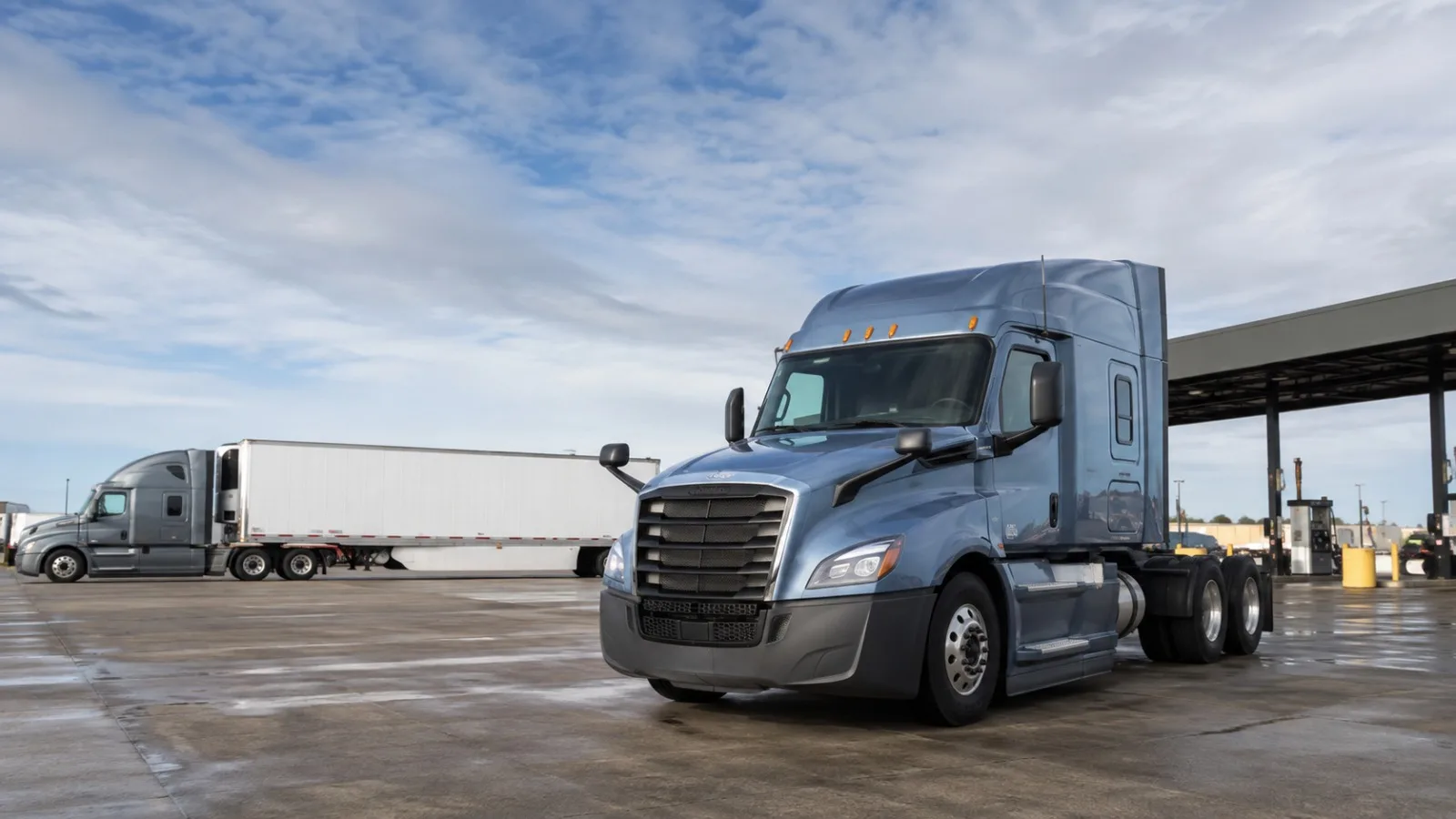
Primary liability, bobtail liability and non-trucking liability are frequently discussed as though they were three versions of the same product. They are not.
The distinction becomes especially important for an owner-operator leased to another motor carrier. A single tractor may move:
- while pulling a loaded trailer;
- while pulling an empty trailer;
- without any trailer;
- under dispatch;
- between assigned loads;
- to a repair shop;
- home after completing work;
- or for a genuinely personal errand.
The physical appearance of the truck does not always reveal which policy applies. A tractor without a trailer may still be engaged in the carrier’s business. A truck parked away from the terminal may still remain under dispatch. A trip that feels personal to the driver may still have a business purpose under the policy.
The answer therefore depends on several facts at once:
- whose authority is being used;
- whether the owner-operator is leased to a carrier;
- whether the movement serves the carrier’s business;
- dispatch status;
- trailer status;
- the lease;
- and the precise policy language.
Primary liability, bobtail and non-trucking liability compared
The simplest way to understand the three coverages is to separate the authority, the configuration of the truck and the purpose of the trip.
| Coverage | Main question | Typical application | Usually relevant to |
|---|---|---|---|
| Primary auto liability | Was the truck engaged in a covered commercial operation? | Bodily injury or property damage caused to third parties during covered business use | Authorized motor carriers and businesses operating under their own authority |
| Bobtail liability | Was the tractor operating without an attached trailer? | Liability arising while the tractor is bobtailing, potentially whether dispatched or not | Leased owner-operators whose carrier program does not cover every bobtail movement |
| Non-trucking liability | Was the truck being used for a genuinely personal, non-business purpose? | Third-party liability during covered personal use | Owner-operators permanently leased to an authorized carrier |
The table provides a useful starting point, but it cannot replace the policy.
Insurers may use terms differently. A policy marketed as “bobtail and deadhead,” “unladen liability” or “non-trucking liability” may define the covered circumstances more narrowly or more broadly than another product carrying a similar name.
The declarations page, coverage form, endorsements and exclusions determine the contractual protection.
What primary liability insurance covers
Primary commercial auto liability generally protects against covered claims for bodily injury or property damage suffered by other people because of operation of the insured commercial vehicle.
For an interstate motor carrier operating under its own authority, the primary liability program is also connected to the carrier’s federal financial-responsibility obligations.
FMCSA requires the appropriate proof of financial responsibility to remain on file for entities that need operating authority. The exact minimum depends on factors such as:
- entity type;
- authority type;
- vehicle weight;
- cargo;
- and hazardous-material classification.
Primary liability under your own authority
An owner-operator operating through their own authorized carrier normally arranges the primary commercial auto liability policy in the carrier business’s name.
That policy should be structured around the actual operation, including:
- tractors;
- trailers;
- drivers;
- commodities;
- operating radius;
- states;
- business use;
- required filings;
- and contractual limits.
A separate leased-owner-operator bobtail policy is not ordinarily the main solution for routine business movements under the owner-operator’s own authority.
The primary policy should address covered commercial movements whether the tractor is:
- pulling a loaded trailer;
- pulling an empty trailer;
- or repositioning without a trailer.
The exact treatment of personal use must still be confirmed.
Primary liability when leased to another carrier
When an owner-operator leases equipment to an authorized carrier, federal leasing rules require the lease to state the carrier’s legal obligation to maintain insurance protecting the public.
FMCSA guidance also states that the carrier does not satisfy its responsibility merely because the owner-operator supplies a policy and MCS-90 naming the carrier as an additional insured. The motor carrier remains responsible for obtaining the proper financial-responsibility level.
This does not mean that every possible movement is automatically covered by the carrier’s primary policy.
Questions can still arise about:
- whether the lease was active;
- whether the driver was under dispatch;
- whether the movement benefited the carrier;
- whether the vehicle was scheduled;
- whether an excluded driver was operating;
- whether the trip was personal;
- whether the carrier’s business-use conditions were satisfied.
What primary liability normally does not protect
Primary liability should not be confused with first-party protection for the owner-operator.
It does not automatically pay for:
- collision damage to the owner-operator’s tractor;
- theft of the tractor;
- fire damage to the tractor;
- cargo damage;
- the driver’s own occupational injury;
- mechanical breakdown;
- lost income;
- towing after every type of event;
- damage below a deductible under another policy.
Those exposures require separate consideration.
| Loss | Coverage normally considered | Not automatically solved by |
|---|---|---|
| Injury to another motorist | Applicable auto liability coverage | Physical damage |
| Damage to another vehicle | Applicable auto liability coverage | Cargo insurance |
| Damage to the owner’s tractor | Physical damage | Primary, bobtail or non-trucking liability |
| Damage to freight | Motor truck cargo coverage | Non-trucking liability |
| Injury to the owner-operator | Workers’ compensation, occupational accident or other applicable protection | Third-party auto liability alone |
| Mechanical failure | Maintenance reserve, warranty or qualifying breakdown product | Liability insurance |
What bobtail liability means
A tractor is bobtailing when it operates without an attached trailer.
Both Progressive’s published terminology and OOIDA’s leased-owner-operator materials distinguish bobtail coverage by the truck’s configuration rather than merely by whether the trip is personal.
Under those descriptions, bobtail liability can apply while the tractor is operated without a trailer, whether dispatched or not.
That is materially different from non-trucking liability.
Bobtailing can still be business use
Consider an owner-operator who:
- delivers a loaded trailer;
- disconnects from the trailer;
- receives instructions to collect another trailer;
- drives the tractor alone to the next facility.
The tractor is bobtailing, but the trip is plainly connected to the carrier’s business.
Describing the movement as “non-trucking” merely because there is no trailer would be inaccurate.
The applicable protection may be:
- the carrier’s primary liability;
- a separate bobtail liability policy;
- another leased-owner-operator liability form;
- or a combination determined by the policies.
Bobtail insurance is not physical damage
Bobtail liability generally concerns injury or damage caused to other parties.
It does not automatically repair the insured tractor after:
- a collision;
- theft;
- vandalism;
- fire;
- hail;
- falling objects;
- or another covered physical-damage event.
A leased owner-operator may therefore need both:
- liability protection for applicable bobtail movements;
- and physical-damage coverage for the tractor itself.
What non-trucking liability covers
Non-trucking liability, commonly abbreviated as NTL, is generally intended for a leased owner-operator’s personal use of the commercial truck.
Progressive describes the coverage as liability protection for non-business uses such as:
- going to a movie;
- visiting a grocery store;
- or completing another personal task.
The potential covered loss is normally bodily injury or property damage caused to another party during an eligible personal trip.
The key issue is business purpose
Non-trucking liability is not defined only by:
- whether a trailer is attached;
- whether freight is onboard;
- whether the ELD shows off-duty;
- whether the driver has completed the last delivery;
- or whether dispatch has sent a new load.
The policy may focus on whether the truck is being operated in the business of the motor carrier.
A trip can remain business-related when the owner-operator is:
- repositioning for the next load;
- driving to pick up a trailer;
- taking the truck for required maintenance;
- returning documents;
- complying with carrier instructions;
- moving to an approved parking location;
- deadheading between loads.
The exact outcome depends on the policy’s language and the facts.
Non-trucking liability exclusions and limitations
Progressive’s published product description states that its NTL coverage does not cover:
- accidents while under dispatch;
- cargo;
- damage to the truck itself;
- and certain other protections that must be purchased separately.
Another insurer’s form may differ, but the broader lesson remains:
Non-trucking liability is a limited gap-filling policy, not a replacement for primary liability or physical damage.
Personal use must be defensible
The owner-operator should be able to explain why the trip was personal.
Useful facts can include:
- no active dispatch;
- no assigned trailer pickup;
- no freight;
- no carrier instruction;
- a personal destination;
- a personal purpose;
- records showing the trip did not advance the carrier’s business.
No single fact guarantees coverage. Together, they help establish the nature of the movement.
Bobtail, deadhead and unladen are not the same
Trucking terminology creates additional confusion because bobtail, deadhead and unladen describe different vehicle conditions.
| Term | Typical meaning | Can it be business use? | Coverage cannot be assumed from the term alone |
|---|---|---|---|
| Bobtail | Tractor operating without an attached trailer | Yes | Primary, bobtail or another policy may apply |
| Deadhead | Truck pulling an empty trailer | Yes, frequently | The trip may remain part of dispatched operations |
| Unladen | Operating without cargo, potentially with an empty trailer or no trailer | Yes | Insurer definitions and endorsements differ |
| Non-trucking use | Personal use outside the motor carrier’s business | Normally no | The policy determines what qualifies as personal |
OOIDA describes its unladen liability product as applying when the truck operates:
- with an attached empty trailer;
- or without a trailer;
- whether dispatched or not.
That is broader than a bobtail-only description because it can include an empty attached trailer.
However, this is a description of a specific insurance offering. It should not be assumed that every insurer uses “unladen” identically.
Which policy may apply in common driving scenarios?
The following examples are illustrative. A claim decision requires the actual policies and facts.
| Movement | Trailer status | Likely character | Coverage to investigate first |
|---|---|---|---|
| Hauling a loaded trailer under dispatch | Loaded trailer attached | Commercial | Primary liability |
| Driving to collect the next assigned trailer | No trailer | Commercial bobtail movement | Primary or applicable bobtail liability |
| Returning an empty trailer to the carrier | Empty trailer attached | Commercial deadhead movement | Primary or applicable unladen coverage |
| Driving to a repair shop required by the carrier | May have no trailer | Potentially commercial | Primary or applicable bobtail coverage |
| Using the tractor for a personal shopping trip | Usually no trailer | Potentially personal | Non-trucking liability |
| Driving home after the final delivery | May have no trailer | Fact-sensitive | Review primary, bobtail and NTL wording |
| Driving to the next load before formal dispatch appears | No trailer or empty trailer | Potentially commercial | Do not assume NTL applies |
Driving home after delivery
This is one of the most commonly misunderstood situations.
The driver may consider the workday complete, but the coverage analysis can depend on:
- whether the lease remains active;
- whether the carrier controls the truck’s next movement;
- whether dispatch has released the driver;
- whether the truck is being repositioned;
- whether the driver is heading to the principal garaging location;
- whether a trailer remains attached;
- policy definitions;
- and applicable case law.
There is no reliable universal rule that every trip home is personal.
Going to a repair facility
A repair trip can benefit both the owner and the carrier.
Relevant questions include:
- Who requested the repair?
- Is the repair necessary before the next dispatched load?
- Did the carrier identify the shop?
- Is the tractor still available for carrier operations?
- Was the owner-operator instructed to move it?
- Does the policy classify maintenance travel as business use?
The owner-operator should ask about this scenario before a loss occurs.
Moving after the lease terminates
Termination can create another transition risk.
The owner-operator should confirm:
- the exact termination date and time;
- when the carrier’s coverage ends;
- when carrier placards must be removed;
- when replacement coverage begins;
- whether the tractor must travel before the new policy is effective;
- whether a receipt or termination document is required.
A tractor should not be driven through a coverage gap created by assumptions about when one policy ends and another starts.
What federal leasing rules require
Federal leasing regulations do not tell an owner-operator which commercial product to buy in every circumstance. They do require transparency about insurance responsibility within qualifying carrier leases.
Under 49 CFR § 376.12, the lease must:
- state the authorized carrier’s legal obligation to maintain public-protection insurance;
- identify who is responsible for other insurance, such as bobtail;
- state any insurance amount charged back to the lessor;
- provide access to policy information when coverage is bought through the carrier;
- identify certificate information;
- and explain cargo or property-damage deductions.
If the owner-operator purchases insurance through the carrier, the lease must provide for a certificate showing information such as:
- insurer;
- policy number;
- effective dates;
- amounts and types of coverage;
- cost charged to the lessor;
- and applicable deductibles.
Insurance deduction does not prove complete protection
A settlement statement may contain an insurance deduction, but the label alone does not answer:
- which policy was purchased;
- who is insured;
- what trips are covered;
- what the limits are;
- what deductibles apply;
- whether cargo is included;
- whether physical damage is included;
- or what exclusions exist.
The owner-operator should request the documents permitted by the lease and verify the coverage.
Documents a leased owner-operator should request
- Complete written lease and every addendum
- Insurance schedule identifying each required coverage
- Certificate for policies purchased through the carrier
- Insurer name and policy number
- Policy effective and expiration dates
- Liability limits
- Deductibles charged to the owner-operator
- Bobtail, unladen or non-trucking policy description
- Physical-damage declarations
- Cargo deduction and chargeback terms
- Settlement deduction formula
- Claim-reporting contact information
- Lease termination and coverage-end procedure
Important gaps these policies do not automatically fill
Damage to your own tractor
Primary, bobtail and non-trucking liability are liability protections.
The owner-operator normally needs physical-damage insurance to protect the tractor against covered:
- collision;
- theft;
- fire;
- vandalism;
- weather;
- or other listed causes.
The policy should identify:
- actual cash value or stated limit;
- deductible;
- towing;
- storage;
- glass;
- attached equipment;
- downtime;
- and lender status.
Cargo loss
A liability policy for injuries and damage to other motorists does not automatically protect freight in the carrier’s care.
Motor truck cargo coverage requires separate analysis.
Occupational injury
An owner-operator injured in an accident should not assume that third-party liability coverage provides workers’ compensation, medical payments, disability income or occupational accident benefits.
Passenger injury
A passenger may create a separate exposure. The owner-operator should verify:
- whether passengers are permitted;
- whether written authorization is required;
- whether passenger accident coverage exists;
- and whether the liability policies contain restrictions.
Trailer damage
Damage to a non-owned trailer can require:
- trailer interchange;
- non-owned trailer physical damage;
- or another policy structure.
Bobtail and non-trucking liability do not automatically solve that exposure.
How to decide which coverage you need
Start with the operating structure.
Coverage decision process for an owner-operator
- 01 Identify the authority
Confirm whether the truck operates under your own motor-carrier authority or under another carrier’s authority.
- 02 Read the lease
Identify primary-liability responsibility, required secondary liability, deductions, deductibles and termination procedures.
- 03 List every non-loaded movement
Include bobtailing, deadheading, maintenance travel, personal errands, home travel and repositioning.
- 04 Classify the purpose of each movement
Separate clear business use, clear personal use and ambiguous situations that require written clarification.
- 05 Compare the policies
Review primary, bobtail, unladen and non-trucking forms for definitions, exclusions and effective periods.
- 06 Protect the tractor separately
Add physical-damage protection where needed because liability insurance does not automatically repair the owner’s truck.
- 07 Document uncertain scenarios
Ask the carrier, agent or insurer for a written explanation before relying on a policy for a recurring movement.
Owner-operator with own authority
A carrier operating under its own authority generally begins with:
- primary commercial auto liability;
- required FMCSA filing;
- motor truck cargo as needed;
- physical damage;
- general liability or other contractual protection;
- trailer-related coverage where applicable.
OOIDA states that an owner-operator whose own business carries the primary auto liability policy generally would not be required to purchase separate bobtail liability merely because the tractor sometimes operates without a trailer.
The primary policy must still be checked for:
- personal use;
- vehicles;
- drivers;
- radius;
- cargo;
- and exclusions.
Owner-operator leased to another carrier
A leased owner-operator should determine:
- what the carrier’s primary policy covers;
- when carrier responsibility begins and ends;
- whether bobtail, unladen or NTL is required;
- who pays for it;
- whether the carrier deducts the premium;
- what deductible can be charged back;
- whether physical damage is separate;
- and how claims are reported.
OOIDA advises that secondary-liability requirements should be specified in the lease.
Questions to ask before buying bobtail or NTL coverage
Coverage comparison checklist
- Does the policy use the term bobtail, unladen or non-trucking liability?
- How does it define business use?
- How does it define personal use?
- Does dispatch status matter?
- Does the policy cover a tractor without a trailer while dispatched?
- Does it cover an attached empty trailer?
- Does it cover travel to a repair facility?
- Does it cover travel to the principal garaging location?
- Does it cover the trip home after the final delivery?
- Does it cover travel after the lease terminates?
- Are all drivers listed or otherwise eligible?
- Is the tractor correctly identified?
- What liability limit applies?
- What exclusions apply?
- Is uninsured or underinsured motorist protection included?
- Are medical payments or personal injury benefits included?
- Does any coverage protect the tractor itself?
- What documents are needed when reporting a claim?
Compare definitions, not only premiums
A cheaper NTL policy may be less useful if its definition of personal use is narrower than expected.
A bobtail policy may be more appropriate for certain leased operations, but it may not include an empty attached trailer.
An unladen form may cover both no-trailer and empty-trailer movements, but its exclusions still matter.
The decision should reflect the owner-operator’s actual movements rather than whichever product has the lowest price.
What to document after an accident
An accident involving a leased owner-operator may trigger questions between multiple insurers.
Preserve evidence immediately.
Claim documentation after a disputed-use accident
- 01 Protect people and report the accident
Follow emergency, police, carrier and insurer reporting requirements without delaying necessary assistance.
- 02 Record the truck configuration
Photograph whether a trailer was attached, whether it was loaded and all involved vehicles.
- 03 Preserve dispatch records
Save messages, load assignments, ELD records, calls and instructions showing the trip’s purpose.
- 04 Document the route and destination
Record where the truck came from, where it was going and why the movement occurred.
- 05 Notify potentially relevant insurers
Follow the reporting duties in the carrier’s primary policy and the owner-operator’s secondary liability policies.
- 06 Do not characterize coverage casually
Describe the facts accurately rather than declaring that the trip was personal, bobtail or business before the policies are reviewed.
Useful records can include:
- police report;
- photographs;
- ELD status;
- GPS history;
- dispatch messages;
- bill of lading;
- trailer interchange documents;
- repair appointment;
- lease;
- trip sheet;
- fuel receipts;
- witness information;
- and policy documents.
Common mistakes owner-operators make
Mistake 1: Treating bobtail and non-trucking liability as synonyms
The terms may be used loosely in conversation, but published insurer definitions distinguish them.
Bobtail focuses on no trailer. NTL focuses on personal use.
Mistake 2: Assuming no trailer means no business use
A tractor can be bobtailing while:
- collecting a trailer;
- repositioning;
- going to an assigned repair;
- returning to a terminal;
- or completing another carrier task.
Mistake 3: Assuming off-duty status proves personal use
Hours-of-service status and insurance business-use definitions serve different purposes.
An off-duty entry does not automatically determine insurance coverage.
Mistake 4: Believing NTL repairs the tractor
NTL is liability coverage. Physical damage generally protects the tractor.
Mistake 5: Buying coverage without reading the lease
The lease should explain:
- carrier public-liability responsibility;
- other required insurance;
- chargebacks;
- deductibles;
- and access to documents.
Mistake 6: Ignoring empty-trailer movements
A bobtail-only policy may be built around no trailer. An empty attached trailer creates a different configuration.
Mistake 7: Failing to coordinate coverage when the lease ends
The carrier’s protection and the owner-operator’s replacement policy must transition without an uninsured movement.
Mistake 8: Relying only on a certificate
A certificate summarizes represented coverage but normally does not reproduce all definitions, endorsements and exclusions.
Final coverage decision matrix
| Operating situation | Primary concern | Coverage structure to review |
|---|---|---|
| Operating under own authority | All covered commercial operations and federal filings | Primary commercial auto liability structured for the complete operation |
| Leased on and regularly bobtailing for business | No-trailer movements connected to carrier operations | Carrier primary policy and any required bobtail or unladen policy |
| Leased on and using tractor personally | Liability during genuine non-business use | Non-trucking liability |
| Frequently pulling empty trailers | Deadhead or unladen movements | Primary policy and applicable unladen wording |
| Protecting the tractor itself | Collision, theft, fire and other physical loss | Physical-damage insurance |
| Transitioning between carriers or authority structures | Coverage start and end times | Written coordination of old and replacement policies |
What the owner-operator should do next
Before driving under a leased arrangement:
- obtain the complete lease;
- identify the carrier’s primary-liability obligation;
- list every required additional policy;
- verify insurance deductions;
- request certificates and policy information;
- identify coverage for bobtail movements;
- identify coverage for empty-trailer movements;
- identify coverage for personal use;
- buy physical damage where needed;
- document ambiguous recurring trips;
- confirm claim-reporting procedures;
- confirm when coverage ends after lease termination.
The correct insurance structure should leave no intentional gap between:
- carrier business use;
- bobtail business movements;
- unladen movements;
- personal use;
- and protection of the tractor itself.