
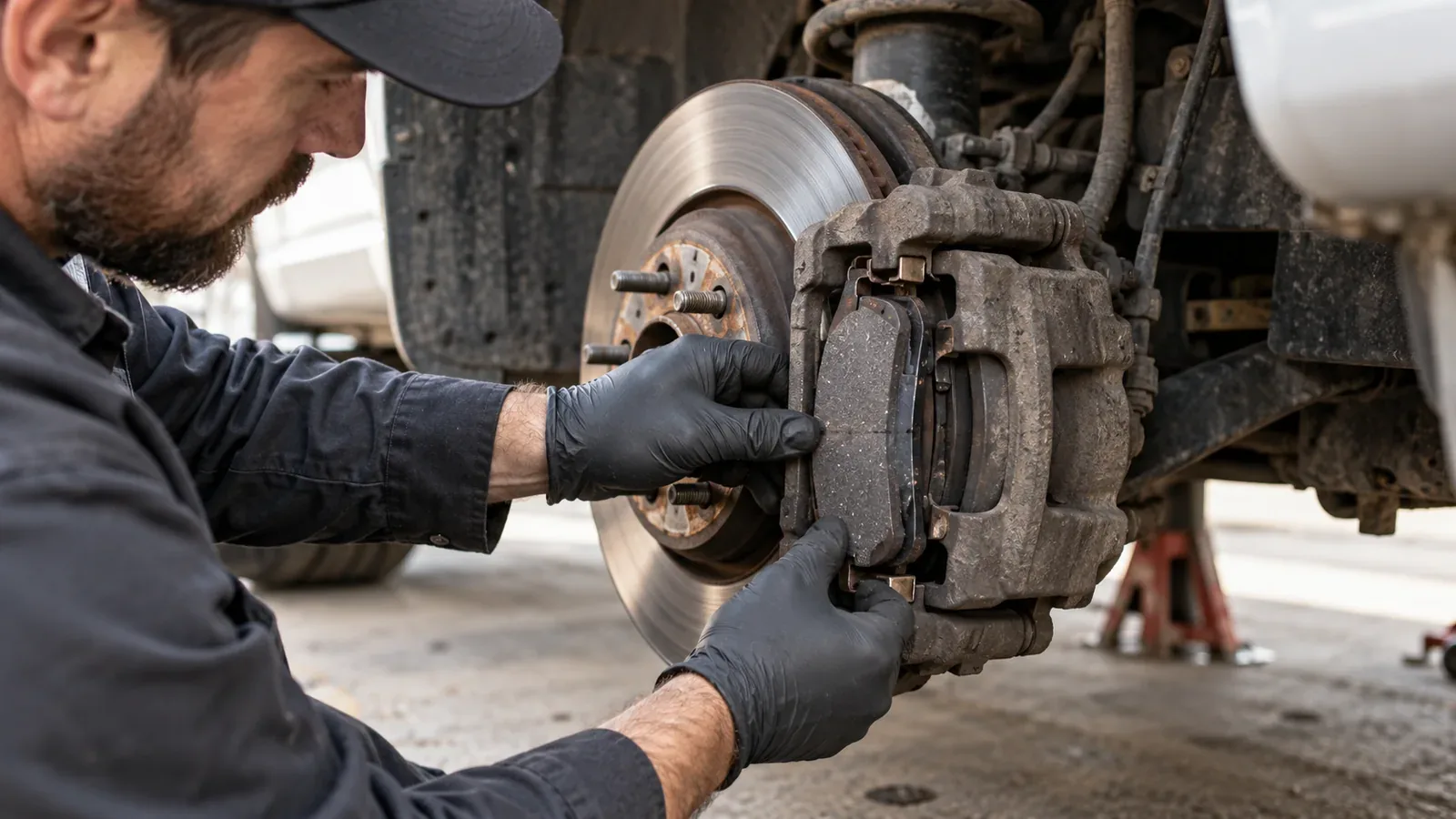
Truck Brakes Squeaking or Grinding? What the Noise Means
You hear it as you slow for a stoplight: a brief squeak from a front wheel. The next morning, it is gone. Or perhaps the noise has become a rough scraping sound that returns every time you press the pedal. Those two situations deserve very different responses.
Truck brake noise is a clue, not a diagnosis. A light squeal can come from damp rotors or brake hardware, but it can also be an early sign of worn pads. A grinding sound may indicate serious pad or rotor damage, although stones and other components can make similar noises. What matters is how the brakes feel, when the noise occurs, and whether there are other warning signs.
This article focuses mainly on pickups and work trucks with hydraulic disc brakes. Larger commercial vehicles may use air brakes and different hardware. If you operate an air-brake-equipped truck, use its inspection procedures and a qualified heavy-vehicle brake technician rather than applying pickup-specific pad checks.
Quick answer: A short squeak on the first stops after rain may come from surface moisture. Repeated squealing needs an inspection; steady grinding, poor stopping, a sinking pedal, smoke, or strong pulling calls for stopping safely and getting professional help. Sound alone cannot tell you whether pads, rotors, calipers, or another component need replacement.
First, decide whether it is safe to drive
Braking is not a system to troubleshoot through repeated road tests when performance feels abnormal. If the pedal is unusually soft, the truck takes longer to stop, pulls sharply under braking, or a wheel emits smoke or an intense burning smell, pull over in a safe place and arrange roadside assistance. Follow any brake-system warning in the owner’s manual.
| What you notice | Sensible next step | Reason |
|---|---|---|
| One faint squeak after a wet overnight parking period, then normal quiet braking | Note whether it clears and whether pedal feel remains normal | Light surface rust or moisture can cause temporary noise |
| Squeal on most stops, or chirping while the wheels turn | Schedule a brake inspection promptly | Wear indicators or brake hardware may be contacting the rotor |
| Repeated scraping or grinding when braking | Avoid normal driving; get professional assessment and consider towing | Metal contact or another serious fault may be present |
| Soft or sinking pedal, major pull, reduced braking, smoke, hot-wheel odor | Stop safely and arrange a tow | Stopping ability may be compromised |
Ford’s owner-manual guidance on brake noise notes that some intermittent noise is normal but recommends checking persistent metal-to-metal or continuous squealing. That distinction is more useful than assigning a specific number of days you can safely wait.
Why truck brakes squeak
Moisture and a thin film of surface rust
Park a pickup outside during rain and its exposed iron rotors can develop a thin layer of rust. You may hear a brief squeal or light scrape during the first few stops as that layer wears away. If braking remains smooth and the sound disappears, this can be normal. A new noise that persists, worsens, or comes with reduced braking should not be dismissed as moisture.
Worn pads and their warning tabs
Some disc brake pads have a small metal wear indicator designed to contact the rotor once friction material reaches a specified wear point. The resulting chirp or squeal may occur even when your foot is off the pedal. Not every pad uses the same design, and some wear warnings are electronic.
Pad replacement limits depend on the vehicle and pad design. Do not rely on one universal thickness figure or assume you can measure the inner pad accurately through a wheel opening. A technician should measure the inner and outer pads and compare them with the service specification.
Pad and hardware vibration
Brake noise can also come from pad movement, missing or incorrectly fitted anti-rattle clips, worn shims, or caliper slide problems. Changing pads without checking these parts may leave the noise unchanged. Quality parts matter, but a squeak does not prove that a previous shop fitted cheap components.
Heat, glazing, and towing duty
Heavy towing, steep descents, and frequent hard stops put additional heat into the braking system. Excessive heat can affect the friction surfaces and lead to noise or poor performance. It may also leave visible discoloration or uneven wear. The proper response is to inspect the complete brake assembly and confirm the cause rather than automatically requesting new rotors.
Road debris
A small stone caught near the rotor dust shield can make a scraping sound while driving, sometimes even without pressing the brake. A technician can examine the shield, pads, and rotor for contact marks. Do not reach between moving or hot brake parts in an attempt to retrieve debris yourself.
Why grinding deserves more urgency
Grinding often brings worn pads to mind: once friction material is exhausted, the pad backing plate can damage the rotor. But grinding may also arise from debris, a sticking caliper, or another rotating component. That is why the sound should trigger an inspection, not a parts order based only on a guess.
A caliper that fails to release can keep a pad dragging against the disc. The affected corner may develop rapid uneven wear and substantial heat. You might notice a smell after driving, a pull to one side, or a recurring scrape. Those symptoms are important to mention to the shop; they should not be reproduced deliberately.
Do not touch the wheel, rotor, or caliper to see whether it is hot. A dragging brake can reach temperatures capable of causing burns. If smoke or a burning smell is evident, get everyone to a safe location and arrange assistance.
Squeaking versus grinding: a practical comparison
| Pattern | Possible explanation | What confirms it |
|---|---|---|
| Short squeak after rain | Rotor moisture or surface rust | Noise clears and inspection shows no abnormal wear |
| Repeated high-pitched squeal | Wear indicator, pad vibration, hardware | Inner/outer pad measurements and hardware inspection |
| Scrape even without braking | Debris, backing plate contact, dragging pad | Wheel-area inspection for contact, heat damage, or drag |
| Coarse grind with the pedal applied | Severely worn friction material or another brake fault | Pad, rotor, and caliper inspection before parts authorization |
| Pulsation while braking | Rotor thickness variation or another brake/suspension concern | Measured rotor condition and a complete brake check |
A pulsing pedal during normal ABS activation is different from a repeatable shudder under ordinary braking. Describe the road and braking conditions rather than assuming the rotors are warped.
Four useful checks when the truck is parked
- Write down the pattern. Is the noise on the first stop, every stop, only in reverse, or even while coasting? Did it begin after a tire change, brake service, rain, or towing trip?
- Check warning messages. Read the exact dashboard message and owner’s manual. A brake-system warning is not just a reminder to change pads.
- Look from a safe position. With the engine off and vehicle secured on level ground, visible leaks, damaged hardware, or unusual rotor scoring may be noticeable without disassembling anything. Do not crawl under an unsupported truck or touch parts that may be hot.
- Review your service history. Recent pad or rotor work, towing loads, and the time since the last inspection help a technician investigate faster.
A low brake-fluid level deserves attention, but it does not establish that the pads are worn. Hydraulic leaks and other faults also need to be considered. Do not top up or open the hydraulic system as a substitute for identifying the cause, and never mix fluids outside the manufacturer’s specification.
What a reliable brake inspection should include
For a pickup with disc brakes, ask the shop to report actual findings rather than simply saying that the brakes are “bad.” A useful inspection includes inner and outer pad thickness, rotor condition and applicable minimum thickness, caliper piston and slide operation, hydraulic leaks, and the condition of clips and related hardware. If the noise comes from one wheel, the shop should explain why.
If rotors are recommended, ask whether measurements or visible damage justify replacing them, and whether the manufacturer’s specifications allow resurfacing. If calipers are recommended, ask what evidence shows a hydraulic or mechanical problem. These questions do not second-guess the technician; they make the estimate easier to understand.
The Federal Trade Commission’s auto repair advice recommends getting a written estimate that identifies the condition, parts, and expected labor. Ask for approval before extra work and keep the inspection findings with your records.
After repairs: what should feel different?
Brake service should restore smooth, predictable pedal feel and stopping performance. The technician should verify the original complaint is resolved, check for leaks and abnormal drag, and follow the pad or rotor manufacturer’s break-in instructions if applicable. A brief bedding-in noise is possible on some systems, but severe grinding, strong pull, warning lights, or impaired braking after service is not something to accept as normal.
Special note for towing and larger commercial trucks
A loaded trailer changes how much work the tow vehicle and trailer brakes must do. If the noise appears only when towing, give the technician the trailer brake setup, load and route details. A problem may be at the trailer rather than the truck’s wheel brakes. Do not assume a successful unloaded test proves that the whole combination is safe.
Medium- and heavy-duty trucks can have air-operated drum or disc brakes and require different inspections, adjustment procedures, and qualifications. The hydraulic-reservoir and disc-pad descriptions in this article should not be generalized to those systems. If your commercial truck is subject to formal brake inspection or out-of-service requirements, follow the applicable requirements and fleet procedures.
A short note for the service appointment
You can make a diagnosis more effective by arriving with four answers: where the noise seems to come from, when it happens, how the pedal feels, and whether the truck pulls or displays a warning. A mechanic can then confirm the actual fault with an inspection. That is safer—and usually more economical—than approving pads, rotors and calipers on sound alone.
Frequently asked questions
Why do my truck brakes squeak only in the morning?
Moisture and surface rust can create a short-lived squeak. If it continues after a few normal stops, gets worse, or braking feels different, have the system inspected rather than assuming it is harmless.
Can I drive with squeaking brakes?
An occasional brief squeak with normal braking may not be urgent, but ongoing noise deserves a prompt inspection. There is no reliable “safe number of weeks” determined by sound alone.
Does grinding always mean I need new rotors?
No. Grinding may indicate serious pad-to-rotor contact, but debris or another mechanical issue can sound similar. A technician should inspect and measure the parts before choosing the repair.
Why do my brakes squeak after new pads?
New friction materials, installation hardware, or the bedding-in process may produce some noise. Persistent squealing, grinding or poor braking after a repair needs the installing shop to check the work and the system.
Could a stuck caliper cause noise when I am not braking?
Yes. A pad that keeps dragging may scrape, heat up and wear unevenly. If you notice a strong burning smell, smoke, major pulling, or impaired braking, stop safely and seek assistance.
Do the same checks apply to air brakes on a semi-truck?
No. Air-brake-equipped commercial trucks have different inspection and service procedures. Use the manufacturer’s instructions, fleet requirements, and a technician qualified for that system.